



There are many people who struggle with severe advanced gum disease or extensive tooth loss every single day. Traditional solutions for these issues like partial or full dentures often leave much to be desired. But all-on-X Fixed Teeth implants give you a versatile and modern standard in full arch restoration.
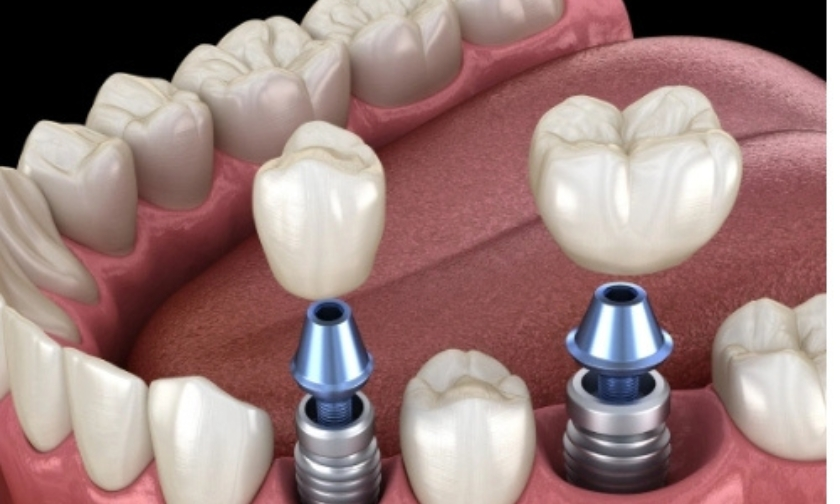
By anchoring a complete prosthetic set of teeth onto a number of implant posts, this treatment restores the strength appearance, and complete oral function. In this article, we’ll cover the benefits, process, and recovery of All-on-X dental implants so everyone considering them is fully informed.
What Does “All-on-X” Mean?
In implant dentistry, the X is a variable that represents a specific number of implant posts that are placed into the jawbone which include 4, 6, or 8 per arch.
The standard All-on-4 approach depends on four titanium posts, but not every single jaw structure is identical. Different factors like jaw bone density bite force sinus anatomy and Jaw size dictate how many implants are needed to give maximum stability.
- The all-on-4 implants are perfect for standard jaw structures or patients who have mild to moderate bone loss by using angled rear implants.
- The all-on-6 implants add two additional posts to distribute the biting forces over a wider surface area and these are recommended for patients who have strong muscle force or wide jaws.
- The all-on-8 implants offer maximum support across the entire arch. These are often used when soft or compromised bone needs smaller and evenly spaced load distribution.
Major Benefits of Fixed Teeth Implants (All-on-X)
There are many different benefits of getting these implants that people sometimes are unaware of and so we are going to discuss them below so you know everything in detail.
- One of the first reasons why people choose these is because they offer maximum stability and bite force. The removable dentures are not permanently locked into place but the implants are and they help in restoring the natural chewing power.
- The titanium implants work as artificial roots. They transmit the chewing forces directly into the jawbone. These stimulate tissues and prevent the facial collapse that is otherwise associated with tooth loss.
- The upper full dentures cover the roof of your mouth and they also reduce the taste sensation. Upper all-on-X bridges leave the palate completely open and also restore natural taste and oral comfort.
The Treatment Process Step-by-Step
Before you get the implants done there is a proper step-by-step process that the dentist has to follow to get started. Let’s find out what exactly it is
- They are going to evaluate everything with 3-D con cone beam CT scanning. The dentist finds the bone density, nerve pathway, and anatomical boundaries to understand the right number and locations of the implants.
- The next step is the surgical placement and immediate loading where any compromised remaining teeth are extracted and the designated number of implants are placed surgically. In most of the cases, a customized bridge is attached on the same day which is temporary but it allows you to leave the clinic with functional teeth.
- In the next 3 to 6 months the jawbone fuses around the implant. During the healing time, the patients stick to a really soft diet to avoid putting force on the integration posts.
- After integration is verified the temporary teeth are replaced with a final full-arch bridge custom-crafted from durable materials.
Long-Term Maintenance & Care
Most people worry that maintaining dental implants is extremely difficult but it is not true because there is not much that you have to do to take care of these implants.
- The first thing that you have to always be careful of is that you must brush your teeth twice every single day with a non-abrasive toothpaste and you must also clean beneath the bridge using floss or some specialized dental brushes.
- You must also go for a checkup twice a year for professional cleanings and also bite evaluation so you know in case something is not okay.
- The last thing that we have to mention is how you should use night guards if you grind your teeth. Pairing a night guard is going to protect the prosthetic surface from any sort of unnecessary wear and tear.